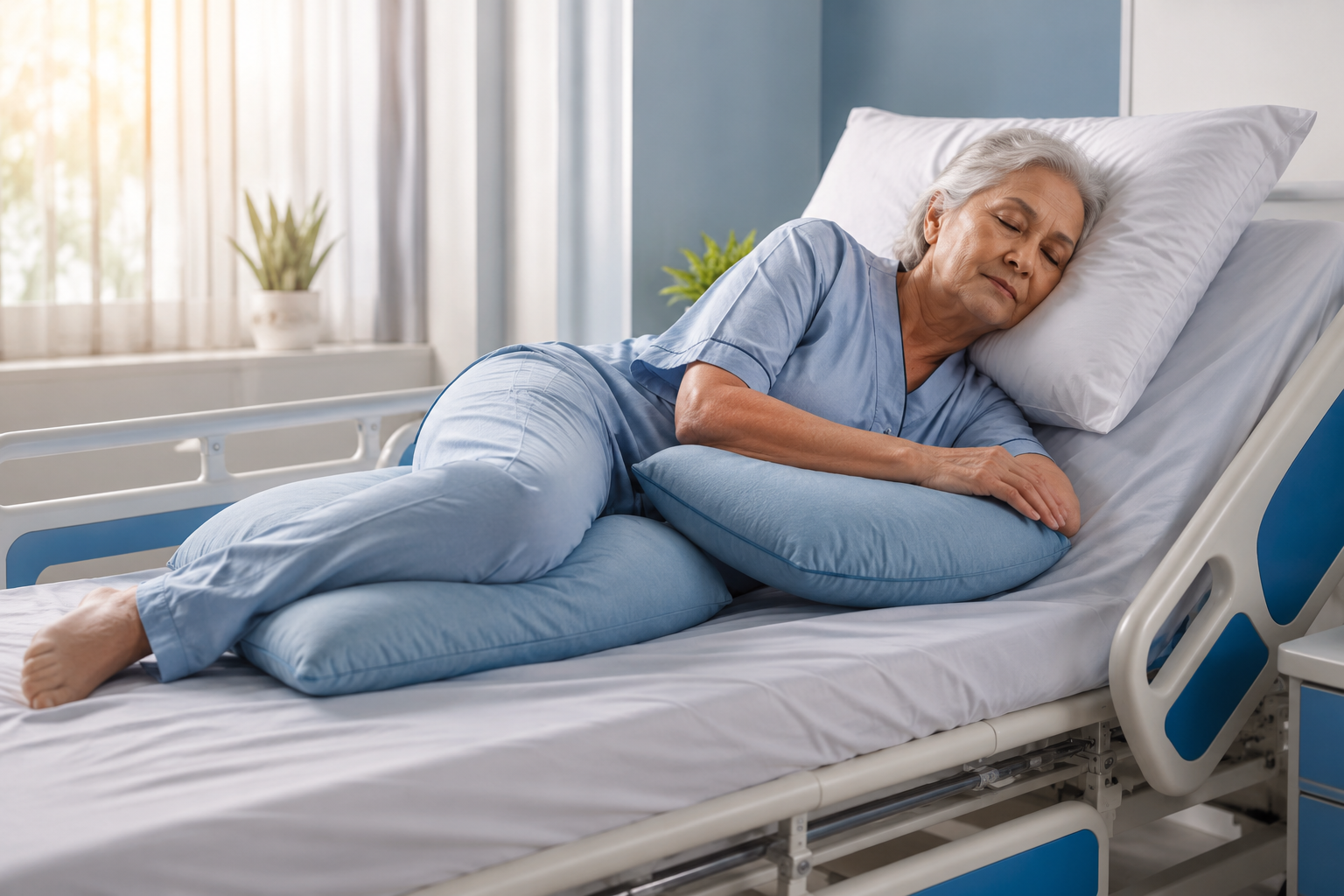
When caring for a bedridden patient at home, most people focus on medications, meals, and doctor appointments.
But there is another important aspect of care that is often overlooked—sleeping position.
The way a bedridden patient lies in bed throughout the day can significantly affect their comfort, breathing, circulation, and overall health.
In fact, remaining in the same position for long periods can lead to pain, pressure sores, and other complications.
The good news is that a few simple adjustments can make a big difference.
Why Sleeping Position Is Important
When a person spends most of their time in bed, certain parts of the body are exposed to continuous pressure.
Over time, this may lead to:
- Bedsores (pressure ulcers)
- Body aches and discomfort
- Poor circulation
- Difficulty breathing
- Joint stiffness
Proper positioning helps distribute pressure more evenly and keeps the patient more comfortable throughout the day.
For Patients With Breathing Difficulties
If a patient experiences shortness of breath or breathing discomfort, slightly elevating the head and upper body may help.
This position can:
- Make breathing easier
- Reduce chest discomfort
- Improve overall comfort
Many caregivers find that even a modest elevation using pillows or an adjustable bed can provide noticeable relief.
Use Pillows for Better Support
Pillows are not just for the head.
They can be used strategically to support different parts of the body and reduce pressure on vulnerable areas.
Consider placing pillows:
- Under the knees for additional leg support
- Between the knees when lying on the side
- Along the back to maintain a comfortable side-lying position
- Under the arms for additional comfort
Proper support helps maintain alignment and reduces unnecessary strain on muscles and joints.
Change Positions Regularly
One of the most important aspects of bedridden patient care is repositioning.
Staying in the same posture for too long increases pressure on specific areas of the body.
Whenever possible, help the patient change positions every few hours.
This may involve:
- Lying on the left side
- Lying on the right side
- Lying on the back when appropriate
Regular repositioning supports healthy blood flow and reduces the risk of pressure injuries.
Pay Special Attention to the Heels
The heels are among the most common sites for pressure sores.
Because they constantly rest against the mattress, pressure can build up over time.
To reduce this risk:
- Check the heels regularly
- Use pillows to relieve pressure when recommended
- Watch for redness or skin changes
Early attention can prevent more serious problems later.
Benefits of Proper Positioning
Correct positioning can offer several important benefits:
- Improved comfort
- Better circulation
- Easier breathing
- Reduced body pain
- Lower risk of bedsores
- Improved quality of life
For someone spending most of their time in bed, these small improvements can have a significant impact on daily wellbeing.
When Should You Seek Professional Advice?
Consult a healthcare professional if the patient experiences:
- Persistent pain despite repositioning
- Difficulty breathing
- Skin redness that does not improve
- Visible pressure sores
- Significant discomfort while changing positions
Professional guidance can help identify the most appropriate positioning techniques for individual needs.
Small Adjustments, Big Comfort
Many caregivers assume that improving a patient’s comfort requires expensive equipment.
In reality, something as simple as placing a pillow in the right position can reduce discomfort, improve sleep, and help prevent complications.
When caring for a bedridden loved one, remember that proper positioning is not just about comfort—it is an important part of protecting their overall health.
Sometimes, a small adjustment today can prevent a much bigger problem tomorrow.