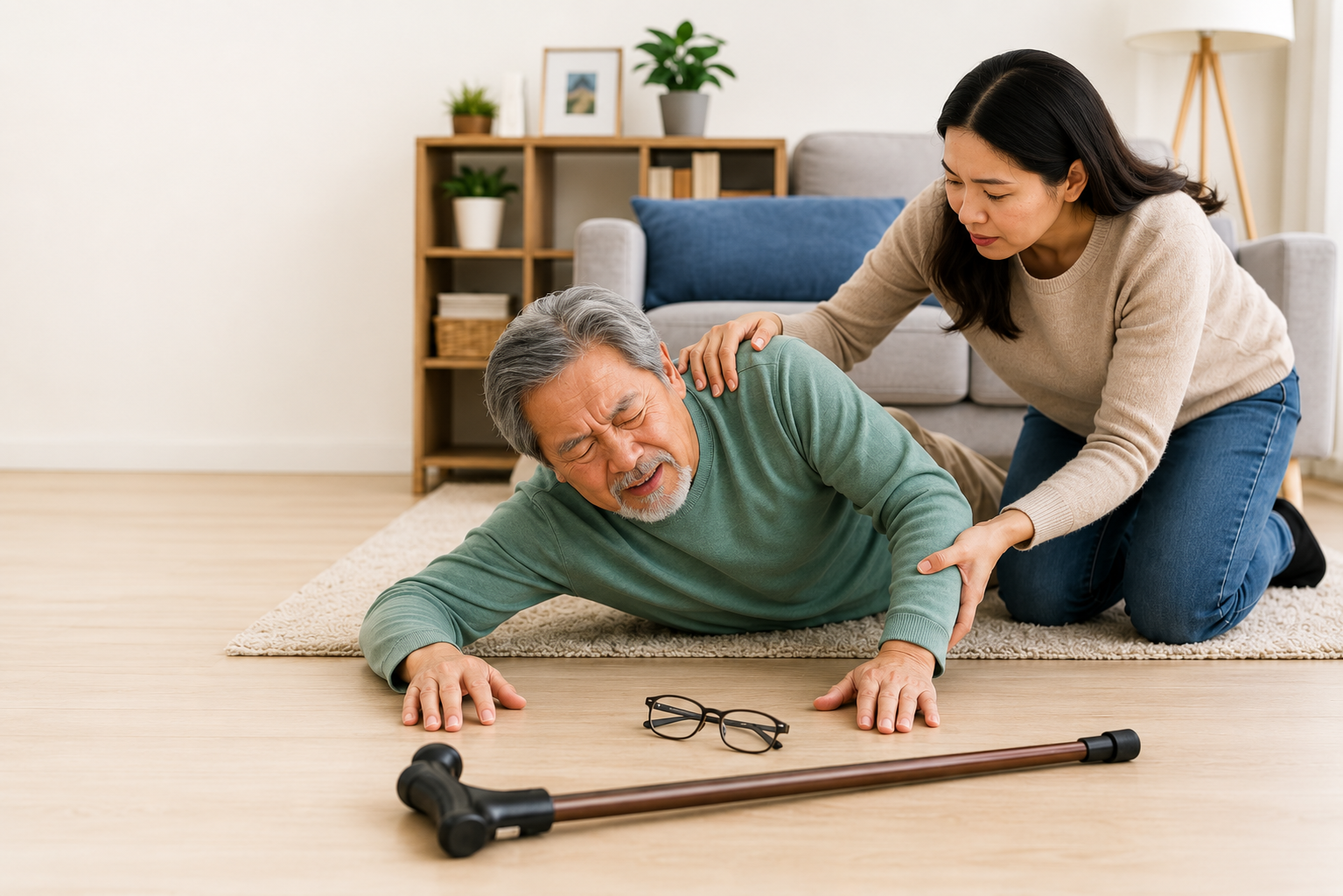
Imagine this situation.
Your elderly father or mother suddenly slips and falls at home. Your first instinct is probably to rush towards them, hold their arm, and pull them up immediately.
It comes from a place of care. But surprisingly, this is one of the most common mistakes people make after an elderly fall at home.
If the person has suffered a fracture, internal injury, or severe bruise, lifting them too quickly can sometimes make the injury worse.
So what should you do instead?
Stay Calm and Assess the Situation
The first few moments after a fall are important.
Instead of immediately trying to lift the person, encourage them to stay still for a moment and ask a few simple questions:
- Are you feeling severe pain anywhere?
- Did you hit your head?
- Are you feeling dizzy or confused?
- Can you move your arms and legs comfortably?
- Is there any bleeding?
Pay special attention to pain in the hips, back, neck, or legs, as these areas are more vulnerable to serious injuries in older adults.
When You Should Not Move Them
In some situations, moving the person can be risky.
Seek medical help immediately if:
- There is severe pain in the neck, back, hip, or leg
- The person loses consciousness
- There is significant bleeding
- They feel extremely dizzy or confused
- You suspect a fracture
- They are unable to move a limb
In these situations, it is safer to keep them as comfortable as possible and wait for professional medical assistance.
If They Appear Uninjured
If the person is alert, able to communicate, and does not seem to have a serious injury, you can help them get up slowly and safely.
A commonly recommended approach is:
Step 1: Help Them Roll Onto Their Side
Allow them to turn gently onto one side.
Step 2: Move to a Hands-and-Knees Position
Help them slowly transition onto their hands and knees if they are comfortable doing so.
Step 3: Use Stable Support
Guide them towards a sturdy chair or stable piece of furniture.
Ask them to place both hands on the chair for support.
Step 4: Rise Slowly
Help them bring one foot forward and gradually push themselves up using the chair for balance.
Avoid rushing the process. Slow and steady movement is much safer.
Why Falls Are a Serious Concern for Seniors
Falls are one of the most common causes of injury among older adults.
Even when there is no visible injury, a fall can sometimes lead to:
- Hidden fractures
- Muscle injuries
- Reduced confidence while walking
- Fear of future falls
- Loss of independence
This is why every fall should be taken seriously, even if the person appears fine afterwards.
Simple Ways to Prevent Falls at Home
Many falls can be prevented through small changes around the house.
Consider:
- Keeping walkways free of clutter
- Improving lighting in hallways and bathrooms
- Installing grab bars in bathrooms
- Using non-slip mats
- Encouraging proper footwear indoors
- Scheduling regular vision and health check-ups
A safer home environment can significantly reduce the risk of future falls.
The Most Important Thing They Need
When an elderly person falls, they do not need panic.
They need calm, safe support.
Taking a few moments to assess the situation before helping them stand can protect them from further injury and ensure they receive the care they need.
Sometimes, the safest help is not lifting them immediately—it is making sure they are lifted the right way.